Why General Procurement Experience Is Not Enough for SaaS
Good procurement still matters, but SaaS renewals play by different rules. This article explains where general buying skills fall short and what CFOs, CIOs and procurement leaders should add before renewal.
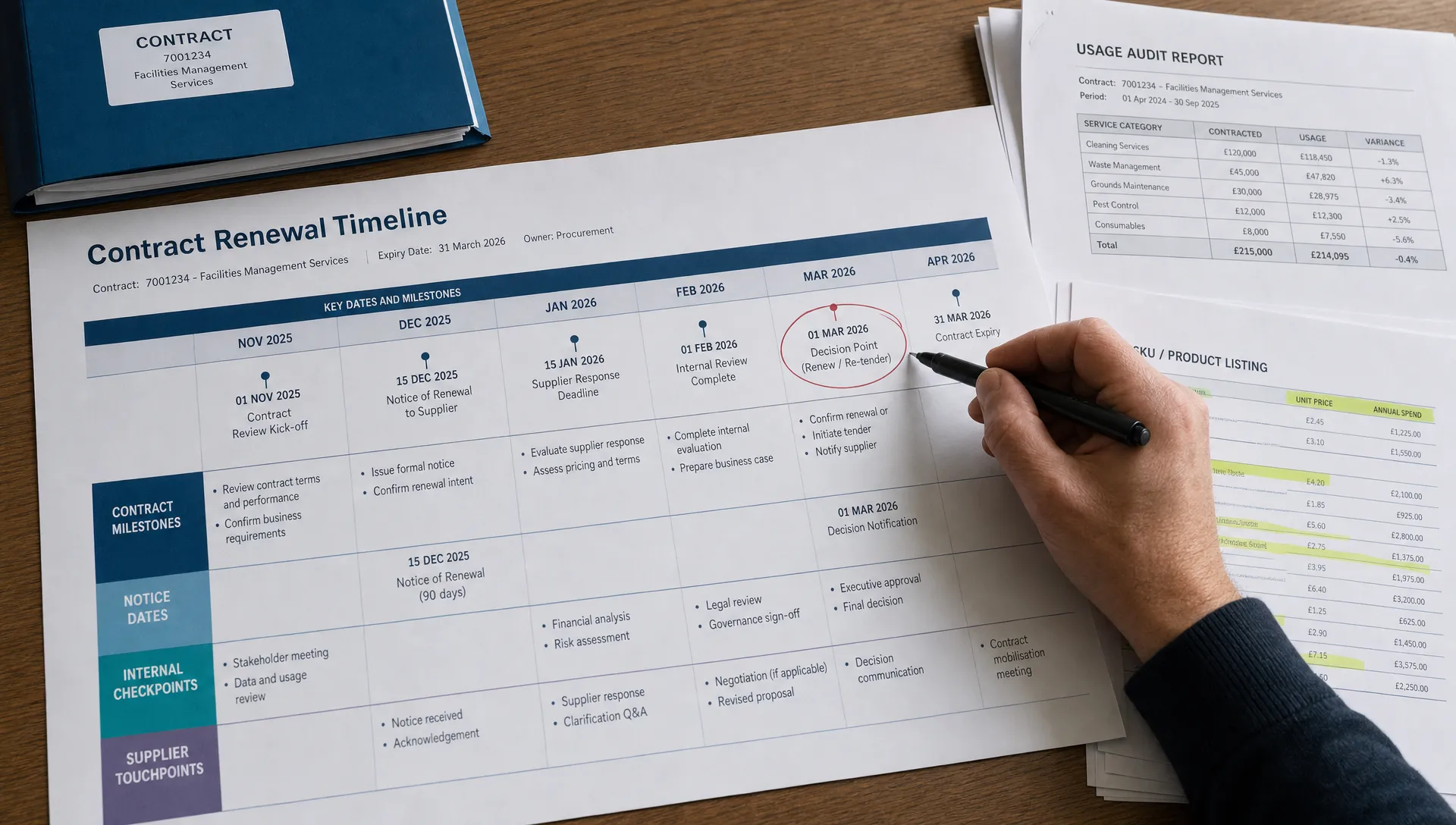
General procurement experience is valuable. It gives a company discipline, process control, stakeholder management and the habit of asking awkward questions before money leaves the building.
But SaaS is not a normal buying category. A buyer can be excellent at hardware, facilities, telecoms or professional services and still miss the commercial traps inside a software renewal. SaaS spend grows quietly, packaging changes without much ceremony and the real negotiation often starts months before the vendor sends the renewal quote.
That is why experience in SaaS matters. Not because SaaS procurement is mystical, but because the category has its own patterns. The best buyers recognise those patterns early enough to act on them.
For CFOs, CIOs and procurement leaders, the issue is not whether your team is capable. It is whether they have seen enough SaaS renewal cycles to know where the leverage hides, where it disappears and which questions must be answered before the supplier controls the timetable.
General procurement skills still matter, but they do not travel perfectly
Good procurement fundamentals do transfer into SaaS. You still need clean governance, commercial discipline, internal alignment and a sober view of risk. You still need to know who owns the decision, who owns the budget and who will suffer if the contract is wrong.
The problem is that SaaS changes the shape of the work. In many categories, demand is easier to see. A fleet, a building lease or a logistics route has a physical presence. SaaS consumption is less visible. Licences can sit unused. Add-ons can be embedded in bundles. Contract terms can create future cost exposure that is not obvious from the invoice.
A general procurement team may negotiate the visible line item well and still leave money on the table because the underlying estate has not been understood.
That is the difference. SaaS procurement is rarely won by pushing harder at the end. It is won by understanding what you are buying, who is using it, what can be changed and what the supplier knows that you do not.
SaaS renewals are built around information imbalance
Most SaaS suppliers know their own commercial model better than the customer does. They know the packaging rules, discount corridors, renewal pressure points, product migration strategy and sales compensation triggers. They also know when a customer is late.
The buyer, meanwhile, often has fragments:
- Finance has the invoice and renewal date.
- IT has an imperfect view of deployment and integrations.
- Business teams know what they like, dislike or no longer use.
- Procurement has the contract, if it is easy to find.
That fragmentation is costly. By the time everyone comes together, the supplier may already have shaped the renewal around assumed growth, minimum commitments or a limited discount window.
This is why broad procurement experience is not enough on its own. SaaS renewals require an early reconstruction of the commercial facts. Without that, negotiation becomes a debate about price rather than a discussion about value, usage, necessity and alternatives.
The first job is not to ask for a better discount. It is to remove the fog.
The buying unit is unusually hard to control
In many procurement categories, the buyer and budget holder are clear. SaaS spreads ownership across the organisation.
Sales may sponsor the platform. Marketing may own a connected tool. Customer service may rely on a specific module. IT may manage security and architecture. Finance pays the invoice. Procurement runs the commercial process. The vendor may have relationships with several of these groups, some formal and some informal.
That makes alignment harder. It also gives the supplier more routes into the account.
A procurement leader with strong general experience may be used to stakeholder complexity, but SaaS adds an extra layer: the users often have genuine operational dependency. They may fear disruption, data loss, integration risk or internal blame if a platform changes. Those concerns are not excuses. They are real constraints and they must be handled properly.
The mistake is treating stakeholder resistance as noise. In SaaS, it is data. It tells you where switching risk exists, where adoption is strong, where shelfware is being defended and where a renewal may be carrying emotional weight rather than business value.
Licence metrics can make a good discount meaningless
A 30 percent discount can still be a bad deal if it applies to the wrong licence base.
This is one of the common traps in SaaS procurement. General buying experience often trains teams to focus on unit price, rate cards and discount levels. In SaaS, those matter, but they are not enough. The licence metric may be more important than the discount.
A renewal can look acceptable while the customer is overcommitted on seats, paying for functionality that has not been adopted or locked into a bundle that no longer matches the operating model.
The commercial question is not simply, "What discount can we get?" It is, "What should we be contracted for in the first place?"
| Procurement focus | Why it can fall short in SaaS | Better SaaS question |
|---|---|---|
| Discount percentage | A high discount can mask overbuying | Are we buying the right quantity and edition? |
| Annual price increase | Caps help, but only after the baseline is right | What cost drivers will affect the next renewal? |
| Supplier consolidation | Consolidation can increase dependency | Are we reducing complexity or deepening lock-in? |
| Contract term | A longer term can secure price, but reduce flexibility | What demand is certain enough to commit? |
| Benchmarking | Benchmarks rarely show the full commercial context | What leverage do we have in this specific estate? |
For Salesforce, this can become especially intricate because product families, editions, add-ons and commercial structures change over time. Salesforce publishes broad product information on its own UK product pages, but the commercial reality inside an enterprise contract is usually more layered than any public page can show.
That is not a criticism of the supplier. It is simply the nature of mature enterprise SaaS.
Shelfware is not always obvious
Unused software is easy to understand in theory and difficult to prove in practice.
A seat may be assigned but inactive. A user may log in occasionally without using the paid functionality. A business unit may claim a licence is needed for future plans that are no longer funded. A module may be technically live but operationally irrelevant.
General procurement experience can identify waste when the data is clean. SaaS data is rarely clean at first pass. Usage, entitlement, role, profile, integration and business purpose need to be interpreted together.
This is why a SaaS licence audit cannot be a spreadsheet exercise alone. The numbers need commercial reading. If 500 licences appear unused, the next question is not automatically, "Can we remove 500?" It may be, "Which of these are genuinely redundant, which are misassigned and which are tied to a process we need to understand before changing the contract?"
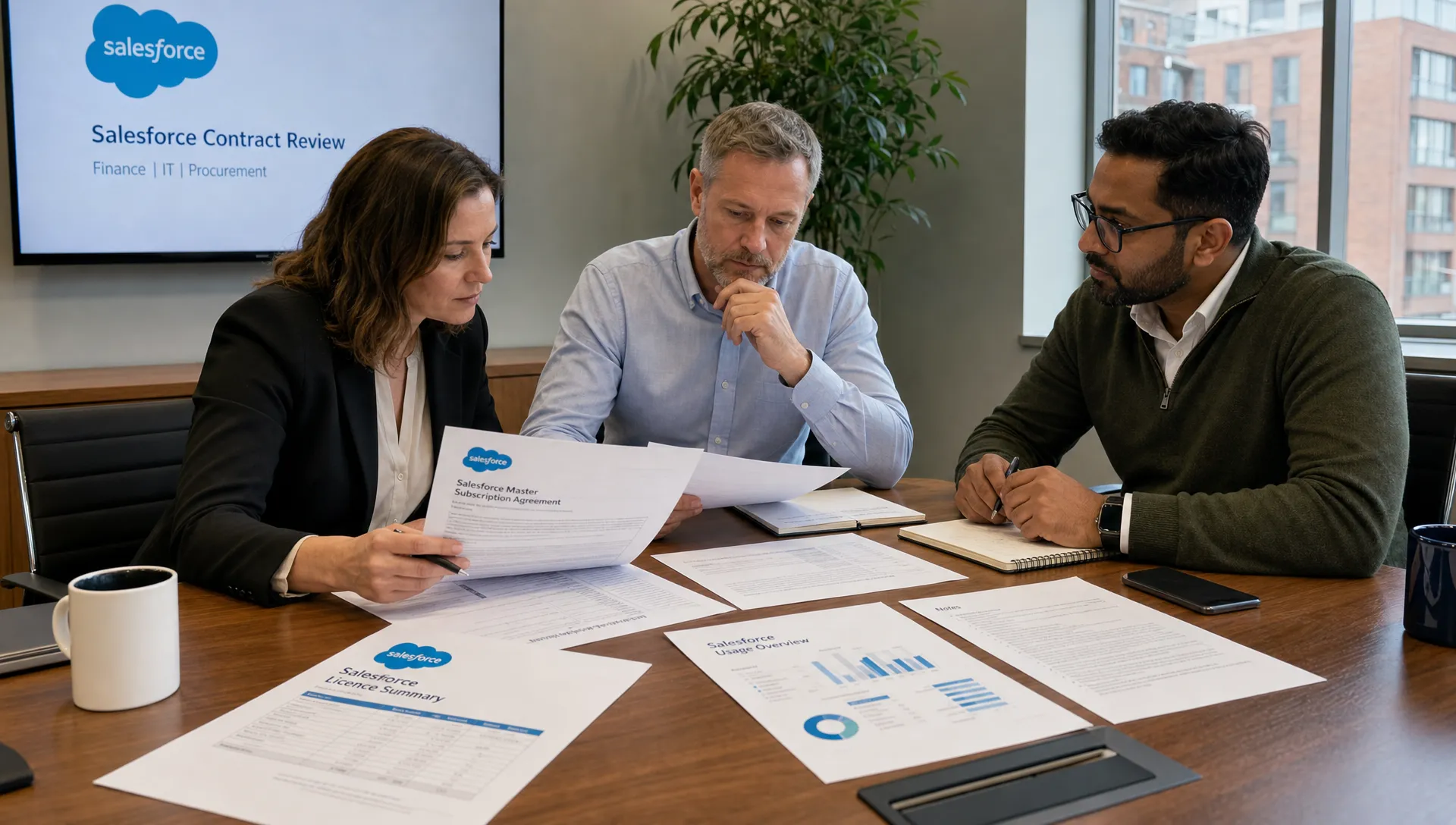
A disciplined audit gives finance and IT a shared view before renewal pressure arrives. If you need a practical structure for that work, SaaSed has written separately on how to audit every SaaS licence before renewal.
SaaS vendors sell expansion into the installed base
Traditional procurement often treats renewal as a continuation event. In SaaS, renewal is frequently an expansion event.
The supplier may propose additional licences, upgraded editions, new clouds, AI features, support packages or multi-year commitments. Some of these may be useful. Some may be premature. Some may be commercially attractive this year but expensive later.
A generalist buyer may see the expansion proposal as a negotiable add-on. A SaaS-experienced buyer asks a harder set of questions:
- Is this expansion tied to a funded business initiative?
- Does the current estate show adoption maturity?
- Are we being asked to commit ahead of proven demand?
- What happens if the roadmap changes after signature?
- Does this reduce flexibility at the next renewal?
The issue is not whether to grow the estate. Many companies should. The issue is whether growth is being contracted at the right moment, on the right terms and with enough evidence behind it.
In SaaS, buying too early can be almost as expensive as buying too much.
Timing is a commercial weapon
In SaaS, late preparation is expensive.
If renewal work begins six weeks before signature, the supplier has leverage. The business is anxious about continuity. Legal has limited time. IT cannot validate alternatives. Procurement has little room to test assumptions. Finance is left choosing between an imperfect renewal and operational disruption.
That is not a negotiation. It is damage control.
Experienced SaaS procurement teams work backwards from the renewal date. They build the licence baseline early, test business demand, review contract terms, check usage evidence and align stakeholders before the supplier frames the deal.
The exact timeline depends on contract size and complexity, but for material SaaS estates, serious preparation often needs to start several months before renewal. Large Salesforce renewals may need even more runway, particularly where there are multiple clouds, integrations, regional entities or planned changes in headcount.
If your team repeatedly enters renewal talks late, the issue may not be negotiation skill. It may be operating rhythm.
Benchmarking is useful, but easily misread
Procurement teams like benchmarks for good reasons. They create challenge. They help finance assess whether a proposal is in range. They can stop a supplier presenting a standard offer as exceptional.
But SaaS benchmarks have limits.
Two customers may buy the same platform and still have very different commercial positions. Term length, growth commitments, product mix, historic concessions, region, implementation dependency and quarter timing can all affect the outcome. A benchmark can tell you whether a price deserves scrutiny. It cannot tell you what your negotiation strategy should be.
The same applies to informal peer data. A CIO may hear that another company achieved a better discount. Useful, yes. Complete, no. Without knowing what that company committed to in return, the comparison may be misleading.
SaaS experience helps teams use benchmarks without being led by them. The question becomes, "What does this benchmark suggest we should investigate?" rather than, "Can we demand the same number?"
That shift matters.
The contract terms can carry more risk than the price
A SaaS renewal can look good on annual cost and still create future problems.
Commercial terms may restrict flexibility, hardwire growth assumptions or make future reductions difficult. Uplift clauses, auto-renewal language, minimum quantities, co-terming decisions, ramp structures and product substitution rights can all affect the real cost of the deal.
General procurement experience will catch some of this. SaaS experience helps prioritise the terms that tend to matter most in software renewals.
For example, a multi-year agreement may be sensible if demand is stable and the commercial protection is strong. The same structure may be risky if the organisation is restructuring, consolidating systems or still trying to prove adoption. A ramp may support a planned deployment, but only if the deployment plan is funded and realistic.
This is where procurement, IT and finance need to be unusually honest with each other. If the roadmap is uncertain, the contract should not pretend otherwise.
SaaS buying involves technical dependency, not just supplier preference
A supplier can be replaceable in theory and hard to replace in practice.
SaaS platforms often sit inside workflows, reporting structures, customer journeys and data models. Integrations may connect to finance systems, identity platforms, data warehouses or third-party applications. Users may have built habits and workarounds over years.
That dependency changes negotiation. A generalist procurement team may push on the threat of switching. A SaaS-experienced team tests whether the threat is credible before using it.
A weak switching threat can damage trust internally and externally. A credible alternative, even if never used, can improve discipline. The difference lies in preparation.
This also applies outside enterprise software. A small business may rely heavily on a website, SEO visibility and automation built by a specialist partner. The same principle holds at larger scale: the commercial conversation must reflect operational dependency, not ignore it.
Category knowledge changes the questions you ask
The best SaaS procurement work often looks quiet from the outside. It is not theatrical. It is a series of better questions asked early.
A general procurement lead may ask, "Can we reduce the renewal price?"
A SaaS-experienced lead asks:
- Which products are genuinely used and by whom?
- Which entitlements are bundled, inherited or no longer needed?
- What demand is confirmed rather than hoped for?
- Which internal stakeholders can approve scope reductions?
- What concessions were granted in the last deal and why?
- Which terms will limit us next time?
- What does the supplier believe our growth story is?
Those questions create leverage because they change the conversation from price pressure to commercial accuracy.
This is also why the habits that work in other categories can hurt in SaaS. If a team waits for the quote, negotiates only on discount or allows stakeholders to speak separately to the supplier, it weakens its position before the formal negotiation begins. SaaSed has covered some of these patterns in more detail in commercial negotiation habits that hurt your position.
What SaaS experience gives a procurement team
Experience in SaaS is not about knowing every product feature. It is about recognising the commercial mechanics behind the product.
A SaaS-experienced team knows how to read a renewal proposal for hidden assumptions. It knows when a discount is less meaningful than a scope correction. It knows that supplier timelines are often designed to narrow the buyer's options. It knows that internal alignment is not admin, it is leverage.
Most importantly, it knows what to do before the negotiation starts.
That includes building a reliable baseline, checking usage against entitlement, separating real demand from inherited demand, reviewing commercial terms and preparing a negotiation position that finance, IT and the business can defend together.
This does not replace general procurement capability. It sharpens it. A strong procurement function with SaaS category knowledge is far more effective than either one alone.
Where general procurement teams tend to underestimate SaaS
The gap usually appears in five places.
First, teams underestimate how much of the renewal is already shaped before the quote arrives. Supplier account planning may begin long before the customer starts internal preparation.
Second, they underestimate the importance of product and SKU structure. A small packaging detail can affect cost, flexibility or migration options.
Third, they underestimate the internal politics of usage. Nobody wants to admit they bought too much, adopted too slowly or kept licences for a project that faded.
Fourth, they underestimate the compounding effect of small concessions. A modest uplift here, a minimum commitment there and a broad renewal base can become hard to defend two years later.
Fifth, they underestimate how quickly leverage decays. Every week lost before a major renewal reduces the room for analysis, challenge and alternative planning.
None of these are failures of intelligence. They are category-specific traps. Teams miss them because SaaS hides complexity in familiar procurement clothing.
A practical test for your next SaaS renewal
Before your next material SaaS renewal, ask five questions internally. If the answers are unclear, your team may need deeper category support.
| Question | Why it matters |
|---|---|
| Do we know exactly what we own today? | Contracted entitlements are the starting point for any credible negotiation. |
| Do we know what is actually used? | Usage evidence helps separate demand from habit. |
| Can we explain every proposed addition? | Expansion should be tied to funded and realistic plans. |
| Are finance, IT and business owners aligned? | Misalignment gives the supplier room to shape the deal. |
| Do we understand the terms that affect future flexibility? | Price is only one part of the commercial outcome. |
If the answer to any of these is "not yet", the renewal is not ready. That does not mean it will fail. It means the work should start before the supplier's timeline becomes your timeline.
For Salesforce specifically, the value of category knowledge becomes even clearer because the estate can include multiple clouds, historic amendments, evolving product names and complex user populations. SaaSed has written a separate piece on why Salesforce experience matters in contract negotiation, which goes deeper into that supplier-specific angle.
Frequently Asked Questions
Is general procurement experience useless for SaaS? No. General procurement experience is still essential. It brings discipline, governance and negotiation structure. The gap is category knowledge. SaaS adds licence metrics, usage ambiguity, renewal timing, packaging complexity and technical dependency that general procurement alone may not fully cover.
When should we bring SaaS expertise into a renewal? Bring it in early enough to affect the facts, not just the final negotiation. For a material SaaS contract, that usually means starting months before renewal so there is time to review usage, challenge scope, align stakeholders and prepare a defensible position.
Can internal IT provide the SaaS expertise procurement needs? IT is critical, but IT and procurement look at different risks. IT can explain architecture, integrations and operational dependency. Procurement needs to translate that into commercial choices. The strongest renewal teams combine both perspectives with finance oversight.
Does SaaS experience matter more for Salesforce than for other platforms? It often does because Salesforce estates can become large, layered and business-critical. Product mix, user types, add-ons, amendments and renewal history all affect leverage. The broader point still applies to other major SaaS platforms.
What is the most common mistake in SaaS renewals? Starting too late. Late teams tend to negotiate the supplier's proposal rather than build their own position. By then, usage analysis, stakeholder alignment and alternative planning are rushed or incomplete.
The sensible next step
General procurement experience gives you the foundation. SaaS experience helps you see what the foundation is sitting on.
For CFOs, CIOs and procurement leaders, the decision is not whether to replace internal capability. It is whether the next renewal is important enough to warrant a sharper category lens before the commercial window narrows.
If Salesforce is one of your larger SaaS commitments, SaaSed can help you review the contract, usage picture, SKU structure and negotiation position before renewal discussions harden. For a calm, practical starting point, you can book a complimentary Salesforce audit conversation through SaaSed's contact page.
Want this kind of intel on your renewal?
Don’t head into your next software negotiation alone
Contact Us