Commercial Negotiation Habits That Hurt Your Position
Commercial negotiation rarely fails because of one bad meeting. More often, small habits weaken leverage before the supplier even sends the quote. This guide shows how CFOs, CIOs and procurement leads can correct them before renewal pressure arrives.

Most commercial negotiation problems do not start at the table. They start earlier, in small habits that feel harmless at the time.
A renewal calendar is left vague. A supplier quote becomes the default reference point. Internal stakeholders disagree quietly, then surface those disagreements when there is no time left. Usage data is accepted at face value because challenging it would slow the process down.
None of this looks reckless. In a busy finance, IT or procurement team, it often looks practical. But in a Salesforce renewal, or any large SaaS negotiation, these habits can steadily weaken your position before the formal discussion begins.
This article is not about becoming difficult with suppliers. Good commercial negotiation is not theatre. It is the disciplined work of knowing what you need, what you can prove, where you have choice, and which terms matter after signature.
The first mistake: treating the quote as the starting point
A supplier quote is not a neutral document. It is a proposal built from the supplier’s view of your account, your past buying behaviour, their revenue targets and their reading of your urgency.
If the first serious internal discussion happens after the quote arrives, the supplier has already framed the negotiation. The numbers, bundles, uplift assumptions and renewal structure become the centre of gravity. Your team then spends time reacting rather than designing the outcome.
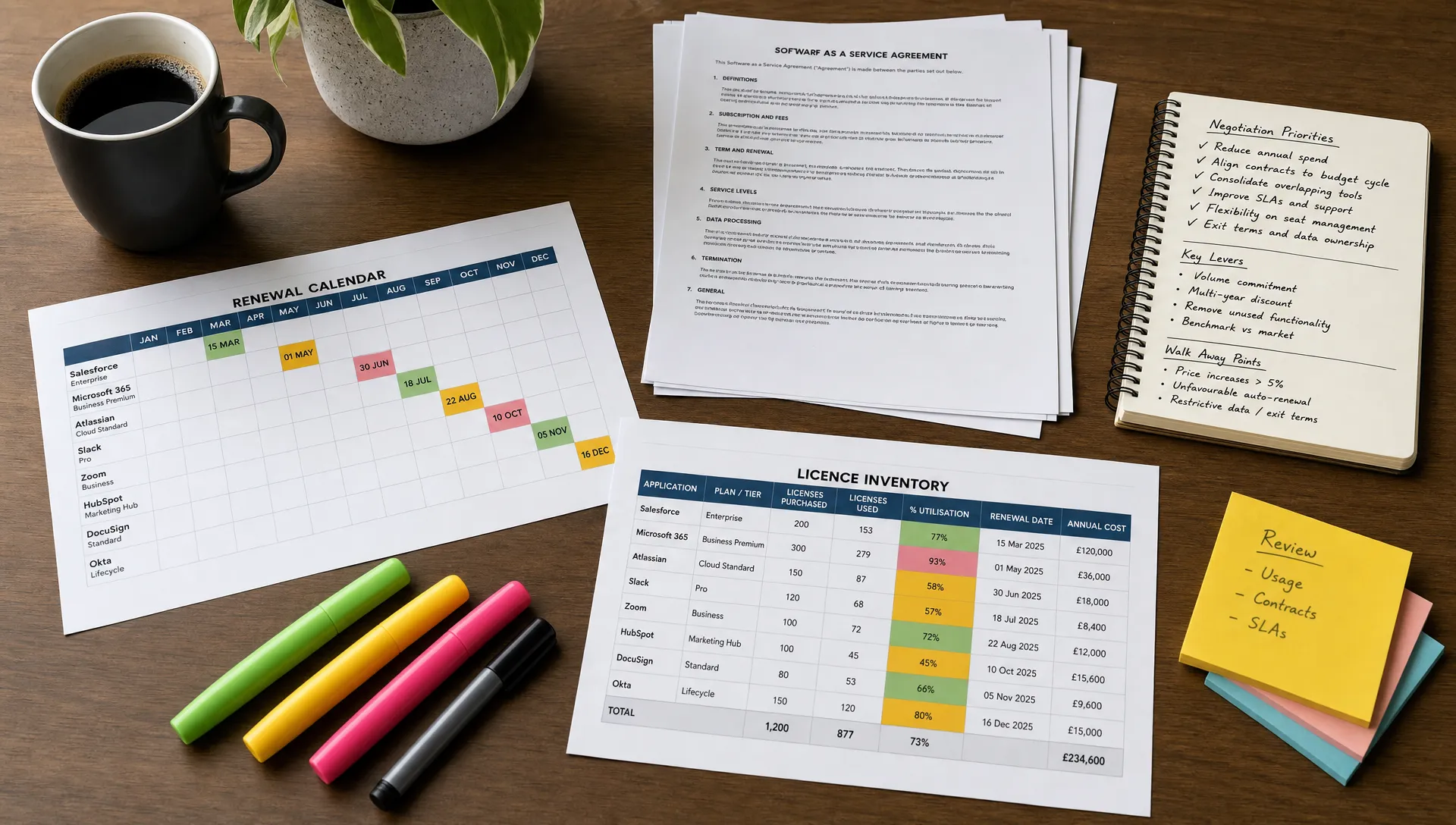
A stronger habit is to build your own baseline first. For Salesforce, that means knowing your current order forms, licence quantities, actual usage, product dependencies, contract dates, auto-renewal mechanics and internal demand before the account team puts a proposal in front of you.
This is why renewal work starts well before the commercial exchange. We have written more on this in why negotiation in contract work starts earlier, because timing is often the difference between control and damage limitation.
The quote should be an input. It should not be the map.
Mistake two: confusing activity with preparation
Many teams prepare for negotiation by holding meetings. They review slides. They discuss options. They ask for forecasts. All of that can be useful, but it is not the same as preparation.
Preparation means the buyer can answer uncomfortable questions with evidence. Which licences are inactive? Which teams actually need premium functionality? Which products are strategic, and which were bought because they sat inside a previous bundle? Which contractual terms limit your ability to reduce, transfer or restructure spend?
If the answer is still being debated during supplier calls, the supplier will sense it. Not because account teams are malicious, but because uncertainty is visible. A buyer who cannot explain their own demand is easier to steer towards the supplier’s preferred structure.
For CFOs and CIOs, this matters because poor preparation rarely shows up as one obvious error. It shows up as a slightly higher renewal floor, a bundle that cannot be unpicked, a concession traded away too early, or a term that creates pain two years later.
Commercial negotiation improves when preparation produces facts, not just opinions.
Mistake three: asking for a discount before cleaning up demand
Discount is often the most visible part of a negotiation, so it gets attention. But asking for a better discount on the wrong scope is still a poor outcome.
Before pushing price, buyers need to challenge the shape of demand. Are you renewing licences that have not been assigned for months? Are you paying for editions or clouds that are not fully adopted? Are there add-ons that solved a temporary problem but stayed in the contract because no one wanted to revisit them?
This is especially important in Salesforce environments, where product names, bundles and entitlements can make spend look more fixed than it really is. A 5 percent improvement on an inflated baseline is not the same as reducing the baseline itself.
In some markets, price comparison is far clearer. If you are buying a physical asset, such as used equipment or shipping containers, you can often see the market more plainly. Enterprise software is different. The commercial value is hidden inside scope, rights, usage, renewal terms and future flexibility.
That is why a licence and SKU review should come before the discount conversation. Otherwise, you risk negotiating hard on a number that should not have existed in the first place.
| Weak habit | How it hurts your position | Better commercial habit |
|---|---|---|
| Starting from the supplier quote | Lets the supplier frame scope, price and timing | Build an internal baseline before the quote arrives |
| Chasing discount first | Improves the wrong number if demand is inflated | Clean up scope, usage and shelfware before price talks |
| Treating all terms as legal detail | Misses renewal floors, uplifts and flexibility limits | Review commercial terms with finance, IT and legal together |
| Revealing urgency too early | Reduces the supplier’s need to compromise | Control timing and messages before supplier meetings |
Mistake four: letting the supplier’s language become your analysis
Suppliers have their own vocabulary. Transformation package. Strategic bundle. Investment protection. Growth platform. These phrases can be useful shorthand, but they should not replace buyer-side analysis.
A bundle may be commercially sensible. It may also hide poor adoption, reduce transparency or create a renewal floor that is difficult to unwind. A multi-year term may protect pricing. It may also lock in demand that your organisation cannot forecast with confidence.
The point is not to reject supplier language automatically. The point is to translate it into buyer language.
For Salesforce, that means checking how the commercial structure maps to actual usage, internal roadmaps and legal rights. Salesforce publishes standard legal materials on its Agreements and Terms page, which can be useful context. But your own order forms, amendments and renewal history are where the real negotiation detail usually sits.
A disciplined buyer asks simple questions:
- What exactly are we buying?
- Who is using it?
- What can we reduce, reassign or remove?
- Which terms control the next renewal?
- What happens if our business needs change?
Those questions sound basic. They are also where many poor outcomes are prevented.
Mistake five: showing internal disagreement to the supplier
Suppliers do not need to know every internal debate. They need a clear, consistent buyer position.
In many renewals, finance wants cost control, IT wants continuity, sales operations wants more functionality, legal wants lower risk, and procurement wants time. These are all legitimate aims. The mistake is taking unresolved tension into supplier calls.
When the supplier hears one stakeholder say the product is essential, another say budgets are frozen, and another ask whether extra licences can be added later, the commercial position becomes fragmented. The supplier can then anchor the discussion around continuity and urgency rather than value and choice.
Internal alignment does not mean everyone gets everything they want. It means the organisation agrees on priorities before it negotiates. For example, the team may decide that reducing shelfware is non-negotiable, that certain products are strategically protected, and that flexibility matters more than an extra point of discount.
A clear hierarchy of priorities gives procurement something to defend. Without it, the negotiation becomes a live internal workshop in front of the supplier.
Mistake six: revealing deadlines without controlling the timetable
Deadlines matter. Suppliers know this. Quarter-end, year-end, budget cycles, project go-lives and contract expiry dates all affect commercial behaviour.
The habit that hurts is not having a deadline. It is letting the supplier understand that your deadline is more painful than theirs.
If your team waits until the final weeks, the supplier has less reason to adjust. At that point, your risk of service disruption, internal escalation or rushed approval may outweigh your willingness to walk away. The commercial negotiation becomes less about value and more about avoiding operational noise.
A better approach is to create a timetable that gives the buyer options. This includes time for usage analysis, stakeholder alignment, legal review, alternative scenarios and escalation if needed. It also means deciding in advance what will happen if the proposal does not meet the required position.
This is not about bluffing. It is about not negotiating from a corner.
If you want a fuller checklist of issues that often appear late, Salesforce contract renewal risks to catch early covers the traps worth checking before the pressure builds.
Mistake seven: negotiating one issue at a time
Suppliers often prefer to narrow the conversation to one visible number, usually discount. Buyers often accept that frame because it feels measurable.
But commercial negotiation is rarely about one issue. The real outcome may depend on payment terms, renewal caps, true-down rights, product swaps, ramp schedules, co-terming, support levels, data commitments, termination language and future purchase protections.
When you negotiate one issue at a time, you lose the ability to trade intelligently. You may give up a term with long-term value in exchange for a short-term price movement that looks good on the approval slide.
The stronger habit is to build a deal architecture. Decide which issues are must-haves, which are tradeable, and which have little value to you but may matter to the supplier. This creates room to move without giving away the wrong things.
It also helps to understand your alternatives clearly. The Harvard Program on Negotiation has a useful explanation of translating BATNA to the current deal. In SaaS, your alternative may not be a full replacement. It may be delaying expansion, reducing scope, removing shelfware, changing term length or shifting budget to a different priority.
A credible alternative does not need to be dramatic. It needs to be real.
Mistake eight: mistaking politeness for weakness, or firmness for friction
Many senior buyers want to preserve the supplier relationship. That is sensible. Salesforce, like other core platforms, is rarely a one-off purchase. The relationship will continue after signature.
But relationship management should not become commercial softness. A buyer can be respectful and still be exacting. You can value the account team and still challenge the numbers. You can recognise product importance and still refuse a structure that does not fit your business.
The reverse is also true. Firmness does not require theatre. Threats, late surprises and aggressive posturing often create heat rather than leverage. They can also distract from the evidence that should carry the negotiation.
The best tone is usually calm, specific and consistent. This is the position. This is the evidence. These are the terms that need to change. This is the approval path. This is when we need the revised proposal.
That kind of discipline is hard to argue with.
What stronger negotiation habits look like
Better habits are not complicated. They are simply less reactive.
A strong buyer builds the renewal file early. The team knows what is in the contract, what is being used, what is not being used, and which commercial terms matter at the next decision point. Finance, IT, procurement and legal agree on the hierarchy of outcomes before supplier engagement intensifies.
A strong buyer also separates facts from preferences. Usage data is a fact, once validated. A stakeholder’s desire for more capacity is a preference, until tied to a business case. A supplier’s statement that a bundle is the best route is a proposal, not proof.
For Salesforce negotiations, this evidence-led approach is especially important because the platform often grows over time through incremental purchases. What looked sensible in year one can become messy by year four. The contract may contain old assumptions, inactive licences, bundled products and renewal terms that no longer match the business.
If you need a deeper view on how terms affect the wider outcome, how contract negotiation shapes your Salesforce outcome explains why the best result is not always the lowest headline price.
The practical shift is simple: stop preparing to respond, and start preparing to decide.
Frequently Asked Questions
What is the biggest commercial negotiation habit that weakens a Salesforce renewal? Starting too late is usually the most damaging habit. Once the quote has arrived and the renewal date is close, the supplier has more control over timing, scope and approval pressure.
Should we focus on discount or contract terms first? Start with scope, usage and terms. Discount matters, but it should be applied to the right baseline. Renewal caps, reduction rights, bundled pricing and flexibility can have a larger long-term impact than a small discount movement.
How early should a Salesforce commercial negotiation begin? For material renewals, six to twelve months is a sensible planning window. Complex estates, SELA structures or multi-country deployments may need more time, especially where usage data and stakeholder priorities are unclear.
Can procurement lead the negotiation without damaging the supplier relationship? Yes, if procurement is aligned with finance, IT and the business owner. Suppliers usually respond better to a clear, evidence-based position than to late surprises or inconsistent messages from different stakeholders.
Conclusion: protect the position before the negotiation starts
Commercial negotiation is rarely won by a clever line in the final meeting. It is won by removing avoidable weakness early.
For Salesforce renewals, that means understanding the contract, validating usage, finding shelfware, aligning stakeholders and deciding which terms matter before the supplier sets the pace.
If your Salesforce renewal is approaching, SaaSed can help you examine the commercial position before talks harden. You can book a complimentary Salesforce audit conversation and pressure-test the areas where money, flexibility or leverage may already be leaking.
Want this kind of intel on your renewal?
Don’t head into your next software negotiation alone
Contact Us