Why a Users License Review Matters Before Renewal
Renewal quantities should reflect the work your teams need to do, not last year’s order. Learn how to turn Salesforce user evidence into a defensible demand plan and test the commercial impact before committing.
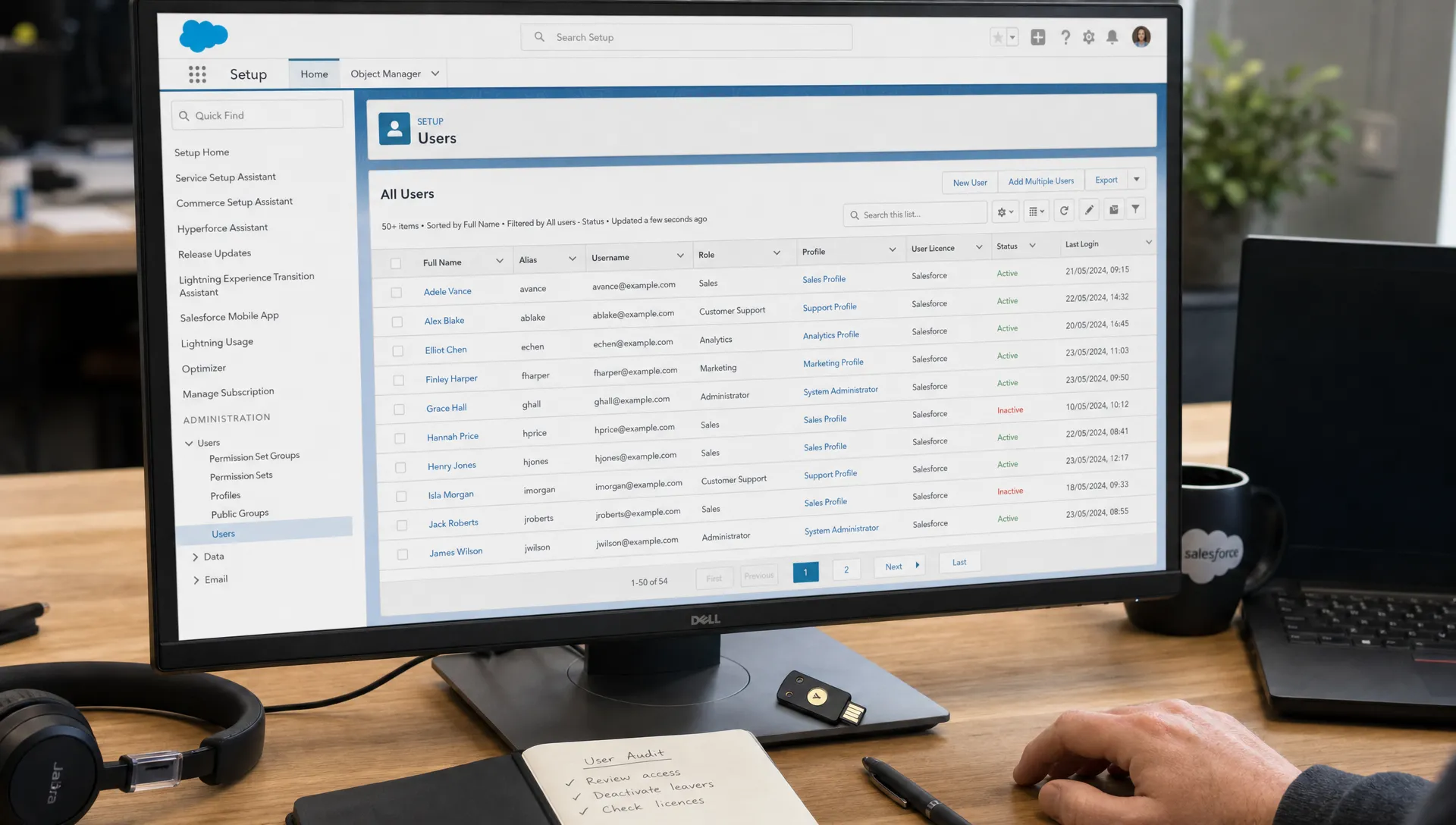
A users license review before Salesforce renewal gives finance, IT and procurement a shared answer to a deceptively simple question: what are we actually committing to buy next? Last year’s order is not evidence of next year’s demand. Neither is the number of active accounts in Salesforce.
The review matters because it connects user needs to a commercial decision. Done properly, it separates necessary capacity from avoidable spend, identifies decisions that need business approval and gives procurement a credible position before renewal discussions begin.
What a users license review needs to establish
A useful review reconciles three different views of the estate: what the organisation has purchased, what administrators have assigned and what the business needs. Those figures often differ for legitimate reasons. Spare capacity may support approved recruitment, while an infrequently used account may serve a critical quarterly process.
The problem is not the difference itself. It is renewing without understanding it.
The output should be a supported demand position, rather than a list of accounts marked for removal. Each proposed change needs an explanation, an accountable owner and a clear distinction between an operational adjustment and a contractual saving.
For leadership, the essential questions are straightforward: which quantities are justified, which remain uncertain and which could change without disrupting work?
A users license review earns its place in renewal planning when it answers those questions with evidence that finance, IT and procurement can all use. A lower count alone is not enough. The organisation needs to know what that count represents and whether it can be translated into a better agreement.
Treat activity as evidence, not a verdict
Login history is a useful starting point, but it cannot establish business need on its own. A user who logs in occasionally may perform an essential approval. Someone who logs in daily may use only a narrow set of functions. An integration account may support important processes without behaving like a human user at all.
Start with the work each account supports, then assess whether the assigned entitlement is appropriate. Salesforce’s official guidance on adding and managing users explains the relationship between user licences, profiles and permission sets. That relationship matters: access requirements cannot be inferred from a job title alone.
Use an observation period that captures the relevant business cycle. Monthly activity may miss quarterly reporting, annual planning or cover arrangements. Record the limitations of the data rather than presenting an incomplete period as conclusive.
Where a different licence appears suitable, validate required features and technical dependencies before recommending a change. The detail belongs in a role-based assessment of the Salesforce user licence mix, not in an assumption that lighter usage automatically means a cheaper entitlement will work.
The users license review should turn activity into a question for the business owner: is this access still needed, and if so, what work does it enable?
Separate account changes from contract changes
Releasing an assigned seat is not the same as reducing the bill. Salesforce’s official guidance on deactivating users describes how deactivation makes a user licence available for reassignment. Whether the organisation can reduce its purchased quantity is a separate contractual question.
This distinction prevents a common forecasting error. IT removes unnecessary access, finance records a saving and procurement later discovers that the committed quantity remains unchanged for the current term.
Review the signed order forms and governing agreement alongside the account evidence. Establish when quantities can change, what notice is required and whether proposed reductions affect discounts, bundles or other commercial terms. Do not assume that every product follows the same rules.
Timing also matters. A well-supported reduction is of limited use if the relevant contractual deadline has passed. Starting the contract review months before renewal gives the organisation time to resolve both the evidence and the available commercial options.
Record three outcomes separately: access removed, capacity available for reassignment and purchased quantity proposed for reduction. They may overlap, but they are not interchangeable.
A users license review should therefore state both the operational action and the contractual action needed to produce any expected saving. Until the latter is agreed, the saving remains a proposal rather than an achieved result.
Build an evidence pack that supports a decision
Procurement needs more than a spreadsheet of names. It needs an explanation of the proposed renewal quantity that can withstand questions from the business and from Salesforce.
A compact evidence pack should connect each material conclusion to its source, its owner and any unresolved condition.
| Review finding | Evidence needed | Decision it supports |
|---|---|---|
| Assigned account has no continuing business need | Employment status, activity and business-owner confirmation | Remove access and assess the renewal quantity |
| Purchased capacity is unassigned | Contract quantity reconciled with assigned licences | Retain justified headroom or propose a reduction |
| User requirements may fit another licence | Required functions, dependencies and technical validation | Test a different licence mix |
| Additional capacity is planned | Approved hiring or deployment plan with dates | Include supported future demand |
| Business need is unresolved | Named owner and a deadline for confirmation | Keep uncertainty visible until it is settled |
The pack should distinguish confirmed decisions from assumptions. “Remove 30 accounts” looks precise, but it is not a reliable instruction if half still await owner approval.
The most useful users license review is one that makes uncertainty explicit. A provisional quantity with clearly stated conditions is more defensible than a supposedly final number built on incomplete checks.
Keep the underlying user-level information within the appropriate internal team. Renewal discussions generally need an explanation of demand by product and role, not unnecessary personal details about individual employees.
Test the commercial outcome, not just the seat count
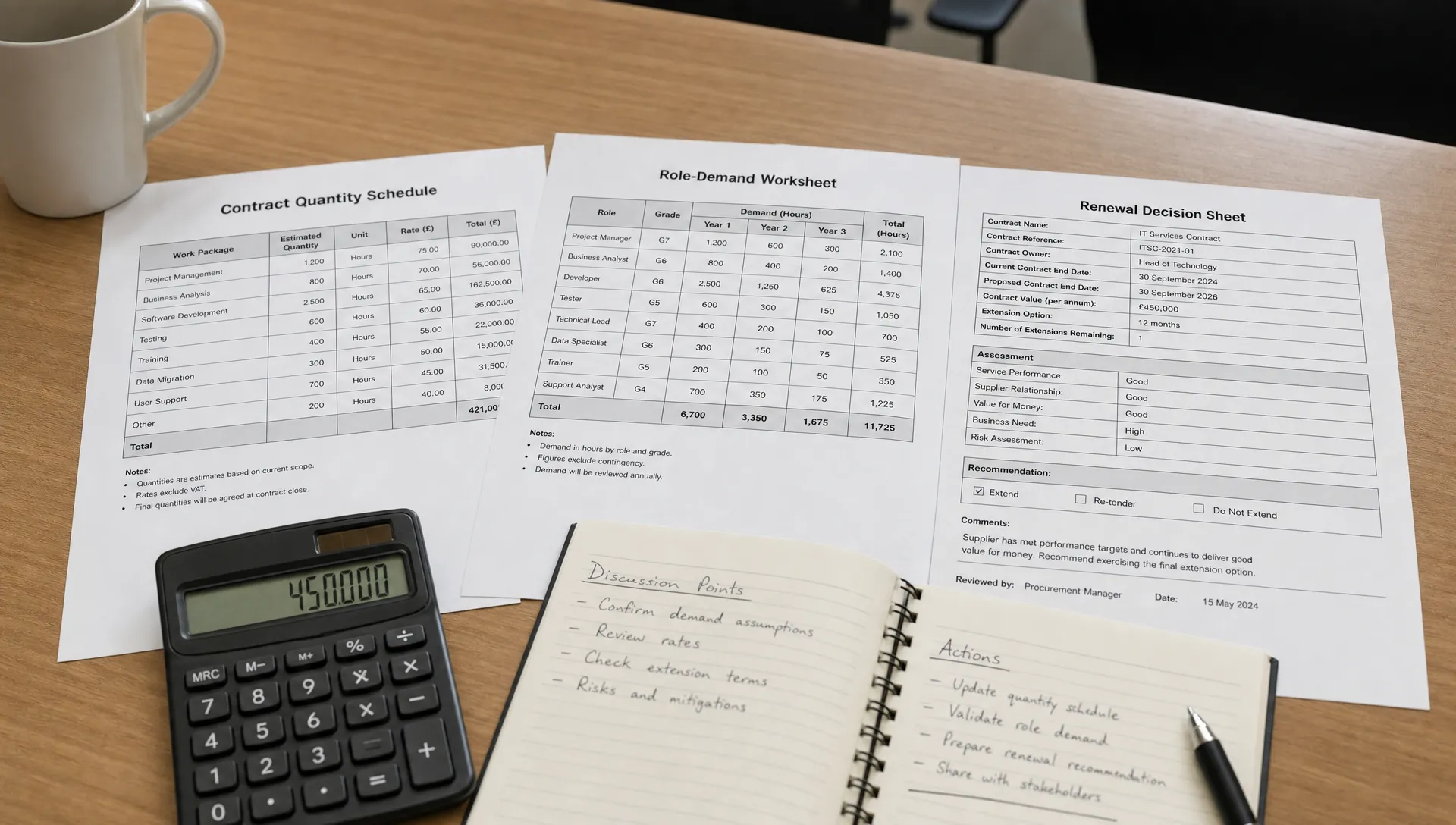
Consider an illustrative example, not a Salesforce benchmark. An organisation has purchased 500 licences and assigned 440. Business owners validate continuing demand for 400, with another 20 required for an approved near-term deployment.
That creates a proposed requirement of 420 and a potential reduction of 80 against the purchased quantity. It does not mean 80 licences can immediately be cancelled, nor does it establish the financial benefit.
Procurement still needs to test the renewal proposal. A lower quantity may come with a changed unit price, a different discount structure or other conditions. Costs may also arise from changing access arrangements or validating a different licence type.
Compare the relevant options over the same period and scope. Include licence charges, required add-ons and any one-off implementation costs. Assess contractual flexibility separately so it is not hidden inside the price comparison.
Finance should also distinguish between an actual reduction in spend and an avoided increase. Both can be valuable, but they answer different budget questions and should not be combined into an inflated savings figure.
A users license review creates a stronger negotiating position by showing which demand is supported and which is not. It does not guarantee a particular discount. Its value is that procurement can assess an offer against a documented requirement rather than simply accepting last year’s quantities with a new price attached.
Agree ownership before the renewal proposal arrives
The review will stall if every uncertain account becomes procurement’s responsibility. Procurement can coordinate the process, but it cannot decide whether a business function still needs access or whether a technical change is safe.
Assign responsibility according to the decision being made:
- IT and Salesforce administration: Validate account status, required access and the technical feasibility of proposed changes.
- Business owners: Confirm continuing need, exceptions and approved future demand.
- Finance: Validate the budget baseline and distinguish proposed savings from agreed outcomes.
- Procurement: Reconcile contractual quantities, establish deadlines and test renewal options.
Give unresolved items a decision date. An account awaiting confirmation should not silently become a permanent exception because nobody followed up. Equally, uncertainty is not sufficient grounds to remove access from a potentially important process.
Use a signed-off demand baseline for negotiations and record any subsequent changes. If an additional deployment is approved during renewal discussions, update the baseline with its owner, timing and quantity. That keeps the negotiation position credible without pretending demand cannot evolve.
The users license review is complete when the relevant owners have approved the demand position and procurement understands how to translate it into a renewal proposal. Completion should be measured by decisions made, not by the number of accounts inspected.
Frequently asked questions
How early should the review begin? Work back from contractual notice dates and the time needed for business validation, technical testing and negotiation. Begin before internal budgets and renewal quantities become fixed. The appropriate lead time depends on the agreement and the complexity of the estate.
Does low usage mean a licence should be removed? No. Low usage is a prompt to investigate. Confirm the work supported, seasonal requirements and dependencies before removing access or changing the assigned licence.
Can unused licences be removed during the contract term? Do not assume so. Reassignment, quantity reduction and cancellation are different actions. The signed agreement and order forms determine the available commercial options.
What should leadership receive from a users license review? A reconciled purchased quantity, a supported demand forecast, approved changes and unresolved exceptions. Leadership should also see the financial implications and any contractual conditions that could prevent the proposed outcome.
Before you approve the renewal
A sound review does not start with a savings target and work backwards. It establishes what the organisation needs, what it has committed to buy and where a change is justified.
SaaSed supports that work through Salesforce contract and SKU review, usage audits and renewal negotiation guidance. If you want to examine your current position before renewal discussions, book a complimentary Salesforce audit conversation.
Want this kind of intel on your renewal?
Don’t head into your next software negotiation alone
Contact Us