When Software Audit Services Are Worth Bringing In
Software audit services are not needed for every renewal. They earn their keep when spend, risk, usage ambiguity or Salesforce contract complexity make internal review too narrow.
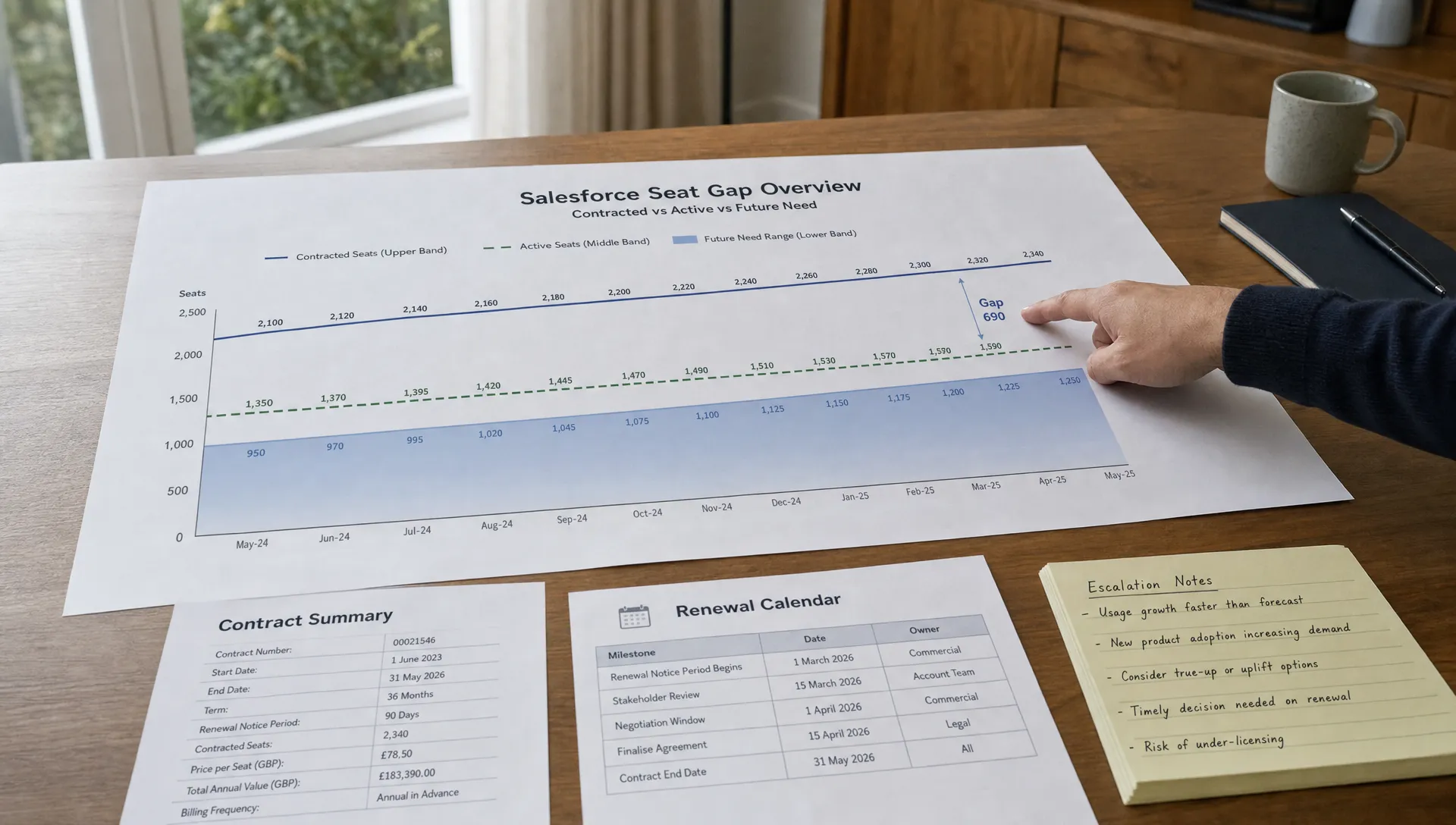
Software audit services are easiest to justify when they change a decision you were already going to make: renew, reduce, consolidate, renegotiate or exit a contract line.
They are not worth bringing in because every tool deserves a grand review. Most do not. A small, stable subscription with clean ownership and obvious usage can often be handled internally. The case becomes different when spend is material, the contract is layered, the renewal date is closing in or the internal view of usage is not trusted by everyone in the room.
For CFOs, CIOs and procurement leaders, the question is not whether an audit sounds sensible. The question is whether it will create better evidence before a commercial decision hardens. That is where software audit services earn their keep.
Start with the kind of audit you actually need
The word audit can mean several different things. Before bringing anyone in, be clear about the job.
- Vendor compliance audit: Usually triggered by the supplier and focused on whether you are using software within contractual limits.
- IT asset or inventory audit: Focused on what is deployed, who owns it, where it sits and whether it creates operational or security risk.
- Commercial renewal audit: Focused on usage, entitlement, SKU fit, contract terms, shelfware, future demand and negotiation options.
For Salesforce and other strategic SaaS platforms, the highest value usually sits in the third category. A renewal audit is not there to catch people out. It gives finance, IT and procurement a shared version of the truth before they sit opposite the vendor.
That matters because most renewal problems are not caused by one bad decision. They are built slowly through add-ons, urgent purchases, unused licences, legacy discounts, optimistic growth assumptions and order forms that no longer match how the business works.
Signs an external audit is worth the effort
A good internal team can do a lot. The point of using software audit services is to add capacity, independence or specialist knowledge where the commercial risk is too high to rely on a light review.
| Signal | Why it matters | What an outside view can add |
|---|---|---|
| The renewal is financially material | A modest correction in licence mix, term or scope can affect the budget | A structured case for change backed by usage and contract evidence |
| The contract has multiple SKUs, editions or order forms | Internal owners may understand their slice, but not the full commercial picture | A consolidated baseline across entitlements, costs and renewal dates |
| Usage data is incomplete or disputed | Admin reports, business feedback and finance records may not align | A neutral evidence pack that separates fact from assumption |
| Shelfware is suspected | Unused, inactive or mis-tiered licences often survive because no one owns the clean-up | A quantified view of waste and practical reduction options |
| The vendor is pushing an early renewal, bundle or multi-year deal | The commercial narrative can move faster than internal analysis | A clearer view of leverage before the proposal becomes the default plan |
| The business has changed | Restructures, hiring pauses, acquisitions or product shifts can make old demand forecasts unreliable | A reset of future needs based on current operating reality |
Materiality does not only mean the largest number on the SaaS register. A contract can be worth a closer look because it supports revenue, customer service, compliance or core operations. If the platform is hard to replace, the cost of a poor renewal is not limited to price.
Objectivity is another reason to bring help in. Internal teams often know the problems, but they may be carrying history. The team that bought a bundle may not want to argue that half of it is no longer needed. A business unit may insist every licence is critical, even when logins suggest otherwise. Procurement may see the commercial issue, but lack the Salesforce-specific context to challenge the proposed SKU path.
If you want the more detailed audit findings that should sit behind a renewal case, SaaSed has a separate guide on what a software audit should find before renewal.
When your internal team can probably handle it
External support is not a trophy. It should earn a place.
If a product is low spend, owned by one team, used consistently and governed by simple terms, an internal review is usually enough. The same is true where the next renewal is a straightforward reduction, the supplier has already accepted the change and the contract does not contain awkward commitments.
The same rule applies outside software. A facilities lead repainting a small Danish office may only need a clear proposal from a local painting contractor, not a deep procurement review of every supplier in the market. Match scrutiny to consequence.
Software audit services are usually not the right answer when leadership is only looking for a box to tick. They work when there is a real decision to support. If the result of the audit cannot change scope, timing, product mix, contract terms or negotiation strategy, the effort may be better spent elsewhere.
Why Salesforce changes the calculation
Salesforce is rarely just one subscription by the time a company reaches a serious renewal. It may include different clouds, user types, add-ons, sandboxes, integrations and order forms signed at different moments. The admin view can show who has access, but it does not always explain whether the business is holding the right commercial rights for the way people actually work.
That is where Salesforce renewals become uncomfortable. A licence can be assigned but barely used. A product can be adopted in one region and ignored in another. A SKU can be technically useful, but priced or bundled in a way that no longer fits the business case. The renewal conversation then becomes less about whether Salesforce has value and more about which parts of the estate are earning their place.
Salesforce keeps its official agreements and legal terms available online, but your own order forms, amendments and renewal history usually carry the commercial detail that matters most. An audit should connect both: the standard framework and the deal you actually signed.
For that reason, the stronger question is not simply whether the business uses Salesforce. It is which Salesforce services are driving value, which are underused and which terms restrict your options. That distinction matters if you are reviewing which services of Salesforce are driving real value before a negotiation starts.
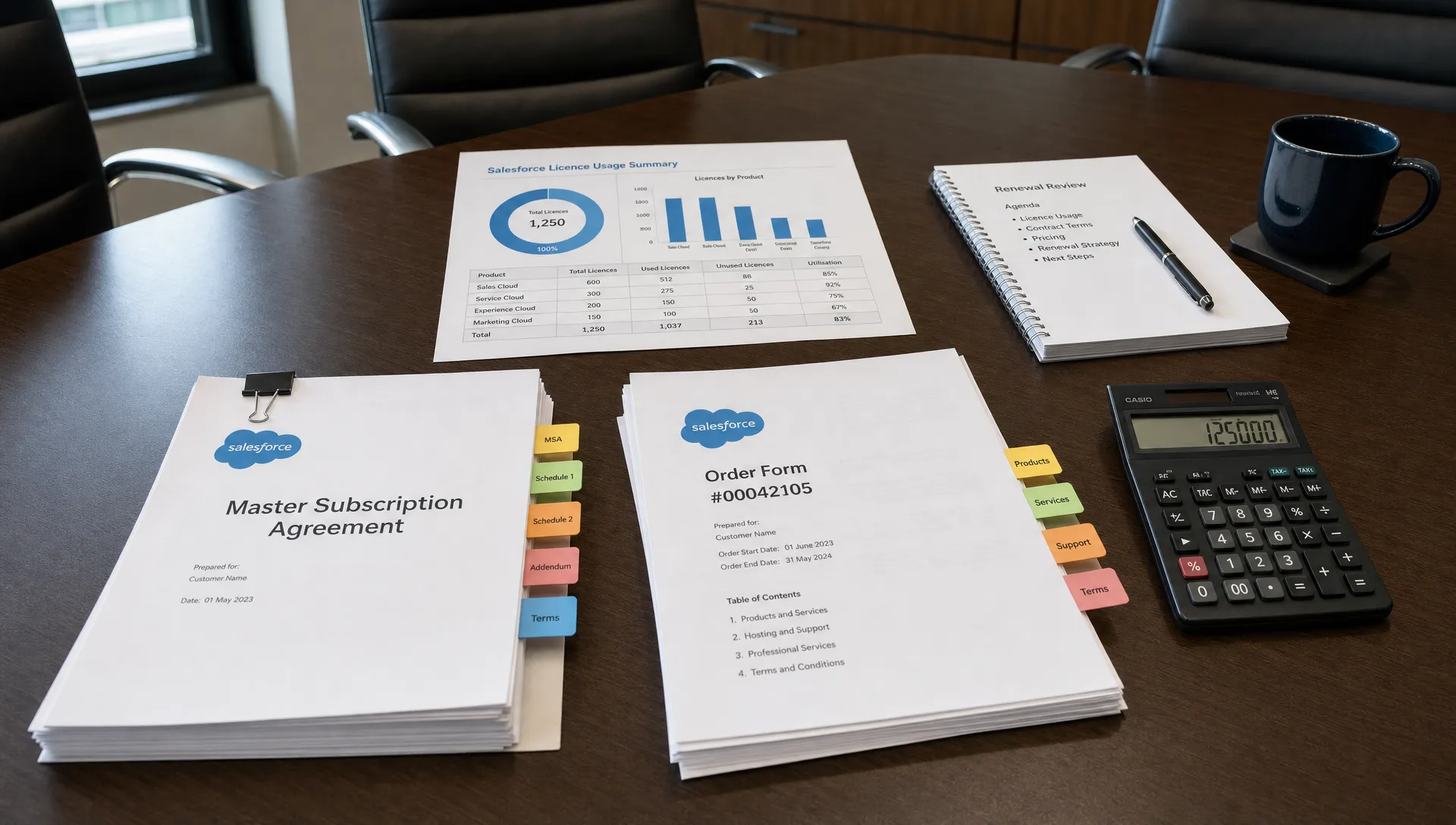
What worthwhile software audit services should produce
A useful audit does not need to be theatrical. It should not bury the decision in a long report that only the project team reads. The output should help senior stakeholders agree what to do next.
| Audit output | Why it matters |
|---|---|
| Contract and order form baseline | Confirms what has been bought, when it renews and which commitments are in force |
| SKU and entitlement review | Shows whether the product mix still matches business need |
| Usage versus allocation analysis | Separates assigned licences from active, valuable use |
| Shelfware and mis-tiering view | Identifies waste that may be removed, downgraded or challenged |
| Commercial risk assessment | Highlights clauses, dates or dependencies that reduce flexibility |
| Renewal options pack | Gives finance, IT and procurement a clear set of negotiation choices |
The best audits also show uncertainty. If usage data is messy, say so. If a licence appears unused but supports a small critical process, name the dependency. If a product is not delivering value because adoption failed, do not pretend the software alone is the problem.
This is where discipline matters. A weak audit hunts for savings and ignores risk. A strong audit looks for the right commercial shape: what to keep, what to reduce, what to restructure and what not to touch without a migration or change plan.
For Salesforce, that usually means reviewing contract language alongside user behaviour. Procurement may see the renewal mechanics. IT may see the platform architecture. Finance may see budget pressure. The audit should bring those views together before the vendor conversation narrows the options.
How early to bring them in
Earlier than the renewal notice is the honest answer.
If you wait until the supplier has issued a final quote, software audit services can still help, but the room for movement is smaller. Internal stakeholders may already have accepted the vendor narrative. Business units may have committed to a roadmap. Procurement may be forced into price-only negotiation because there is no time to challenge scope.
For strategic platforms, several months of runway is healthier. That allows time to gather order forms, clean user data, speak to business owners, test future demand and agree what finance, IT and procurement are willing to defend.
This is why Salesforce renewals often need attention earlier than the diary suggests. SaaSed has written more on why software renewals need attention earlier than you think, especially where the supplier relationship is strategic and the renewal date is already visible.
How to brief an external audit team
A good brief saves time and avoids a generic review. Before the first session, gather the documents and signals that show how the contract actually behaves.
- Current master agreement, order forms, amendments and renewal notices
- SKU list, quantities, unit pricing where available and contract dates
- User allocation, login, adoption and role data
- Known business changes, such as hiring plans, restructures or regional shifts
- Vendor proposals, meeting notes and any pressure points already raised
- Internal concerns from finance, IT, procurement and business owners
Then set a clear question. For example: should we renew the same Salesforce estate, reduce it, restructure it or negotiate a different commercial path? That is a better brief than asking for a general audit.
Also ask what the audit team will not do. If they will not advise on negotiation timing, say so. If they will not validate technical dependencies, say so. If they need admin exports from your Salesforce team, agree ownership early. Clear boundaries make the work sharper.
The decision test
Bring in software audit services when better evidence can change a material commercial decision.
That may mean reducing unused licences. It may mean keeping spend flat by changing the mix rather than fighting over headline discount. It may mean delaying an expansion until adoption catches up. It may mean accepting that a product is valuable, but the current contract shape is not.
The second test is defensibility. Can finance, IT and procurement explain the renewal position to the business, the supplier and the board without relying on guesswork? If the answer is no, an audit can be a calm way to replace opinion with evidence.
The third test is leverage. If the supplier knows more about your estate, your timelines and your dependency than you do, you are not negotiating from a strong position. A targeted audit helps close that gap before the conversation becomes about discount alone.
Frequently Asked Questions
When should software audit services be brought in? Bring them in when the renewal is material, the contract is complex, usage is unclear or the supplier is shaping the commercial conversation before your internal evidence is ready.
Are software audit services only about finding unused licences? No. Shelfware is important, but a proper audit should also test SKU fit, contract terms, renewal timing, future demand, commercial risk and negotiation options.
Can an internal team do the audit instead? Yes, if the contract is simple, usage data is clean and the team has enough time. External support is most useful when independence, specialist knowledge or extra capacity will change the outcome.
What makes Salesforce audits different? Salesforce estates often grow through multiple products, order forms, teams and assumptions. The audit needs to connect contract rights, SKU structure, actual usage and business value before renewal.
How long before renewal should the audit start? Start several months ahead where possible. A late audit can still find issues, but earlier work gives you more room to change scope, align stakeholders and negotiate on more than price.
A quiet next step
You do not need an external audit for every SaaS renewal. You do need one when the spend, risk or complexity is too large for guesswork.
At SaaSed, we focus on Salesforce contract and SKU review, usage audit, shelfware analysis, commercial risk assessment and renewal negotiation support. The aim is simple: help you understand your position before the renewal conversation starts to move without you.
If Salesforce is approaching renewal and you want a clear view of what is worth testing, book a complimentary Salesforce audit conversation. We will help you decide whether a deeper review is justified, and if it is not, we will say that too.
Want this kind of intel on your renewal?
Don’t head into your next software negotiation alone
Contact Us