Salesforce Marketing Cloud Supermessages: How Multipliers and Channel Costs Work
Supermessages make Marketing Cloud messaging spend harder to read than a simple per-message rate card. This guide shows how channel multipliers, SMS locality, credit expiry and Journey Builder automation can change the real cost profile.

Executive overview: no fluff
Salesforce Marketing Cloud messaging cost is not simply “number of messages x unit price”. The core commercial unit is Supermessages: a contracted consumption pool that gets drawn down as messages are sent across Email, SMS, WhatsApp, Push and related channels.
The catch is simple: one message is not always one commercial unit. Supermessages replace clean per-message pricing with multiplier-based consumption. Email may draw down at a low relative rate. SMS and WhatsApp can draw down much faster, especially where geography, carrier fees or message type change the economics. Push is usually lighter, but automation can still create waste at scale.
That is why salesforce supermessages pricing should be reviewed as a consumption model, not as a marketing line item. A campaign plan that looks modest in message count can become expensive once channel mix, country mix and automation rules are applied.
Salesforce publishes product guidance in Salesforce’s Super Messages documentation, but the numbers that matter commercially are in your order form, product schedule, rate card and renewal proposal. If you are still assessing the platform more broadly, start with our comprehensive guide to Salesforce Marketing Cloud capabilities and enterprise fit.
Complexity is a tax on the unknown. In Marketing Cloud messaging, that tax usually appears as overage, expired credits or credits consumed by journeys nobody is actively watching.
Supermessage multiplier mechanics
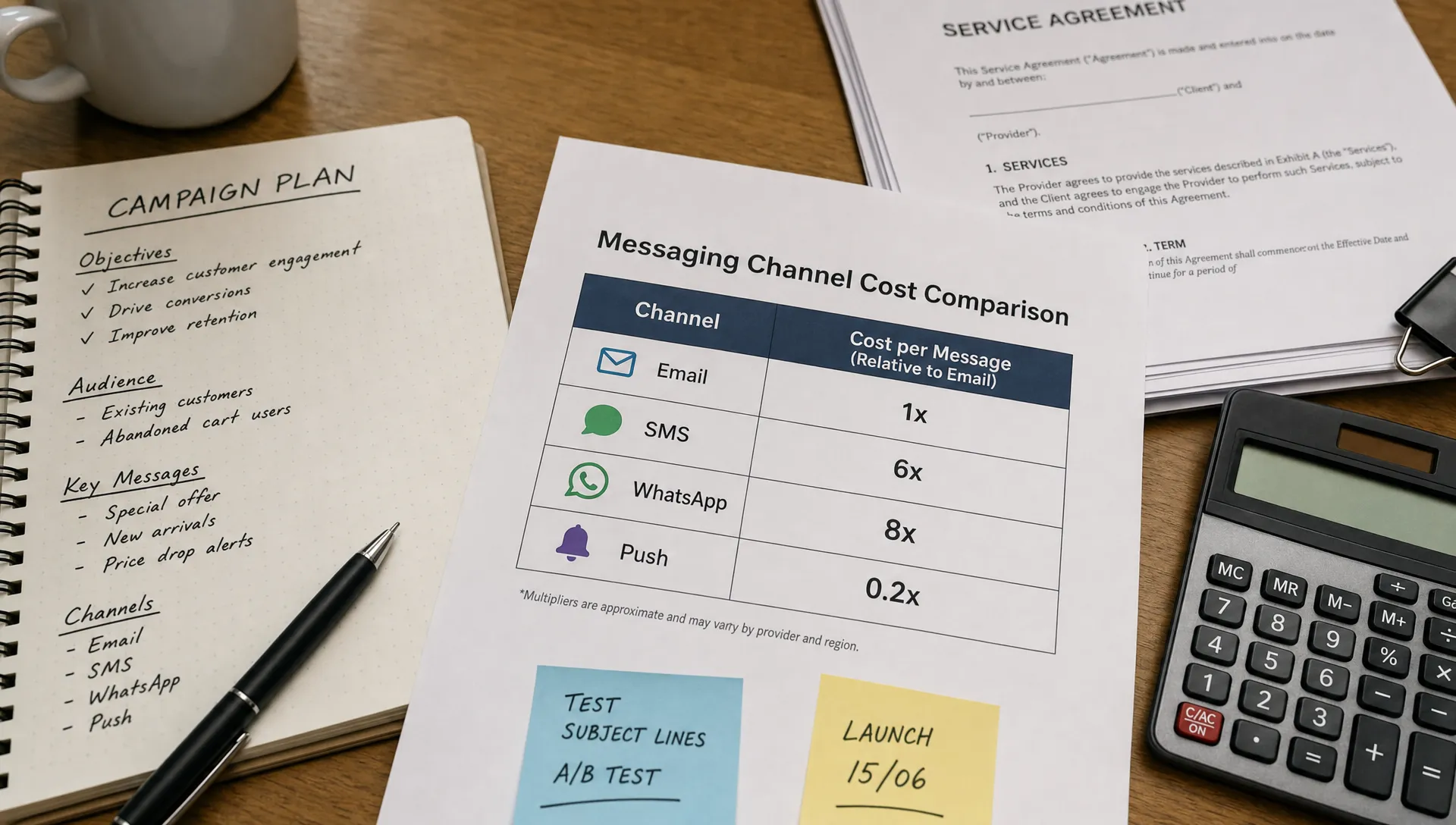
Marketing Cloud messaging multipliers behave like exchange rates. Each channel converts a send into Supermessage consumption at a different relative rate. The exact multipliers vary by contract, edition, geography and commercial terms, so the table below is not a rate card. It is a risk map.
| Messaging Channel | Relative Multiplier Rate | Commercial Risk / Overage Driver |
|---|---|---|
| Low | High-volume campaigns, duplicated audiences, poor suppression logic and unnecessary resend rules. | |
| Push Notifications | Very low to low | Usually efficient, but high-frequency triggered journeys can create invisible noise and contact fatigue. |
| SMS | High and geography-sensitive | Country-level carrier costs, long messages split into multiple parts, two-way messaging, sender requirements and A2P fees. |
| Medium to high, depending on use case | Template type, country mix, business-initiated messages, re-engagement flows and campaign frequency. |
For finance and procurement teams, the important question is not “What is the average cost per message?” It is “What happens to our contracted pool when the campaign mix changes?”
Ask for four figures before renewal:
- Contracted Supermessage allowance by contract year.
- Multiplier assumptions by channel and geography.
- Overage price, trigger point and billing mechanism.
- Expiry, rollover and true-up treatment for unused credits.
If those numbers are not clear, the model is not ready for approval.
Top 3 financial traps in Supermessage contracts
1. Global SMS campaigns can create localised rate surges
SMS is where many forecasts break first. A central team may model “one SMS per customer”, but Salesforce SMS cost overage risk often sits at country level. Carrier pricing, delivery requirements, sender registration, message length and local rules can change the drawdown materially.
A UK-heavy SMS plan and a global SMS plan are not commercially equivalent, even if the message count is the same. This matters for CMOs as much as CFOs. A small shift in target geography can turn a controlled activation into an unplanned consumption spike.
Before signing, test your forecast against the real country mix, not the average.
2. Unused credits may expire at contract year-end
A Supermessage pool can look generous on paper and still be wasteful. If credits are allocated annually and do not roll over, underuse becomes lost value. This is common when marketing teams buy for a peak campaign period, then leave unused allowance sitting idle for the rest of the year.
The risk is worse when a multi-year deal includes flat annual quantities but the operating plan does not. Year one may be implementation-heavy with low usage. Year two may be campaign-heavy with overage. Without rollover flexibility, you can lose value early and pay extra later.
This is the same family of issue as minimum commitments, shelfware and usage clauses discussed in contract clauses that drive up Salesforce costs.
3. Journey Builder loops can consume credits quietly
Journey Builder is powerful, but automation changes the spending pattern. Manual campaigns tend to be visible. Always-on journeys are quieter.
The common leakage points are re-entry settings, missing exit criteria, duplicated audience logic, retries, resends and triggered messages attached to operational events. None of these needs to be dramatic to matter. A small loop running every day across a large contact base can consume a meaningful share of the pool before anyone asks why.
How to pressure-test the model before renewal
The practical answer is not to suppress messaging. It is to price the behaviour you actually expect.
Build three simple scenarios: base case, campaign upside and automation failure case. For each one, model channel mix, geography, message length, journey frequency and contact growth. This is closer to commercial simulation than spreadsheet tidying. Anyone who has run a commercial simulation will recognise the point: assumptions only become useful when you stress them.
A disciplined renewal review should answer these questions clearly:
- Which channels consume the same Supermessage pool?
- Which multipliers apply to each channel and territory?
- What happens if SMS or WhatsApp usage doubles mid-term?
- Are unused credits lost, rolled over or rebalanced?
- Who owns monitoring once the contract is live?
If the vendor cannot explain the consumption model plainly, slow the process down. If they cannot convince you, they may be relying on confusion.
SaaSed helps enterprise teams pressure-test Salesforce renewals, SKU decisions and commercial risk before the negotiation narrows. If a grounded second view would be useful, you can book a complimentary Salesforce audit conversation with our team.
Want this kind of intel on your renewal?
Don't head into your next software negotiation alone.
Contact Us
Want this kind of intel on your renewal?
Don’t head into your next software negotiation alone
Contact Us